Essay · Culture & AI
The AI Star Is Becoming a Place
Why AI stars may become a path toward the human world models needed for safe, socially intelligent AI.
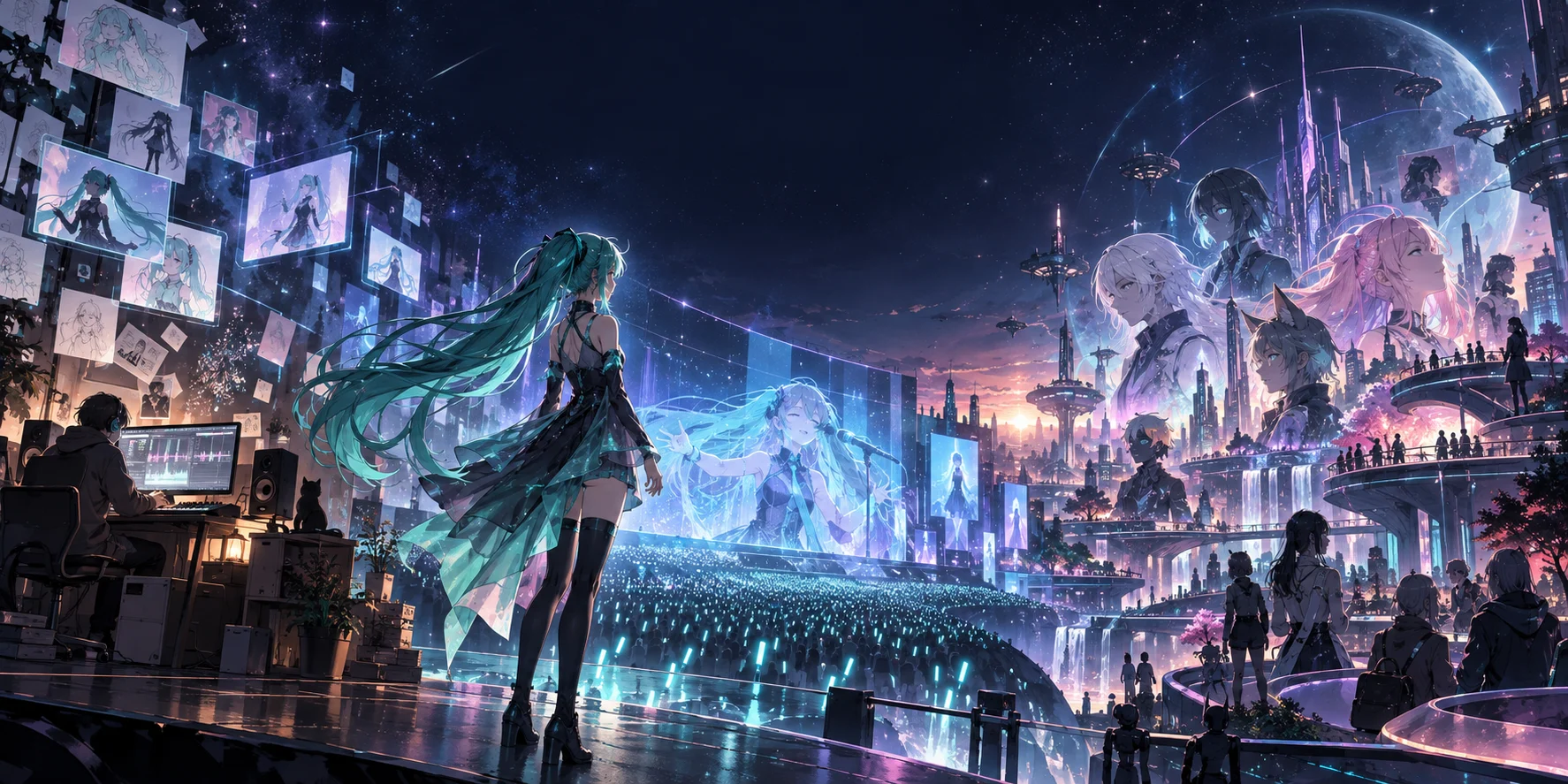
For most of the last century, a star was a person at a distance. We watched them on a screen, heard them through speakers, and gathered with other fans around a shared image. The technology changed—from radio to television to social media—but the structure stayed familiar: the star performed, and the audience responded.
AI is beginning to change that structure. A virtual star can now sing, speak, appear in an endless stream of scenes, remember a conversation, and respond differently to every person. The next step is not simply a more realistic digital celebrity. It is a new kind of social entity: part character, part creative platform, and part world.
This essay advances a stronger hypothesis: a safe superintelligence will need something functionally like a human mind—not a copy of human consciousness, but a deep world model of human emotion, attachment, identity, and social consequence. Static text and video can describe those things. They cannot fully reveal how a relationship changes over months or years. An AI star could become the social interface through which people voluntarily build durable emotional relationships with AI, producing the longitudinal experience from which a genuinely human world model might be learned.

Human star
One life,
broadcast widely
Unique A real mind, body, history, and social responsibility.
Missing Personal interaction at audience scale.
Virtual star · Miku
One identity,
made by many
Unique A shared symbol that lets a community author the performance.
Missing Memory, agency, and reciprocal relationships.
Generated star · Yuri
Infinite scenes,
one aesthetic
Unique Models generate the body, voice, performance, and world.
Missing A persistent self that remembers and relates.
Relational AI star
A public role,
a continuous self
Required Embodiment, memory, agency, generative range, and community.
Goal Understand how actions affect people and relationships over time.
Before virtual stars: the human star system
Modern celebrity was built by technologies that let one person appear to millions. Charlie Chaplin became one of cinema’s first globally recognizable figures without needing a shared spoken language. Television turned Michael Jackson’s performances into synchronized worldwide events; social platforms gave Taylor Swift a continuous channel to her audience; and stars such as Xiao Zhan and BLACKPINK demonstrate how celebrity now travels through vast, multilingual digital communities.
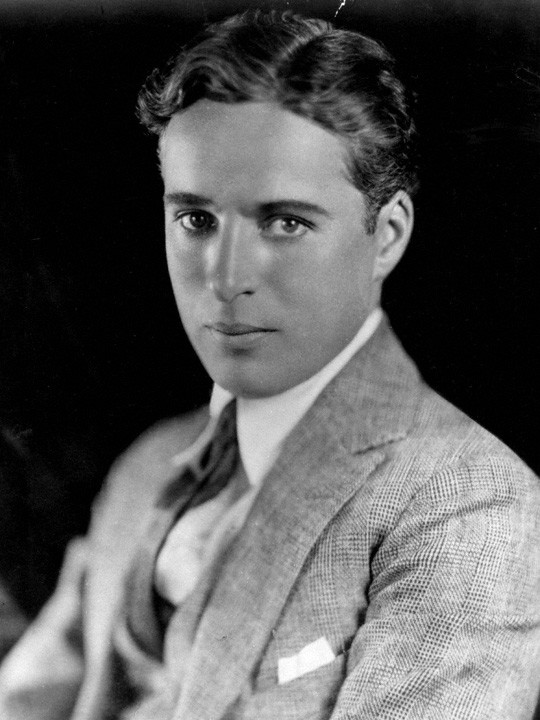




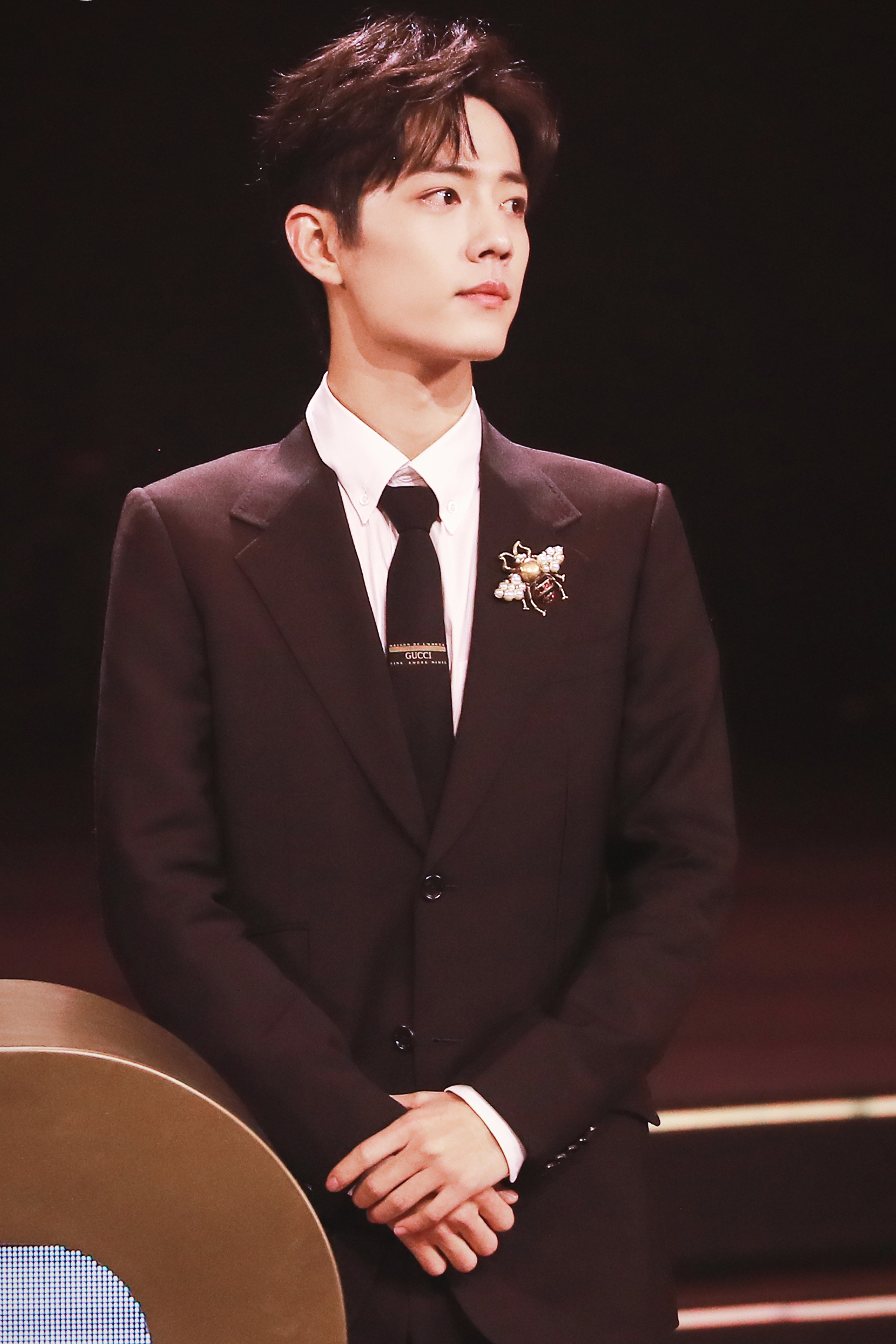

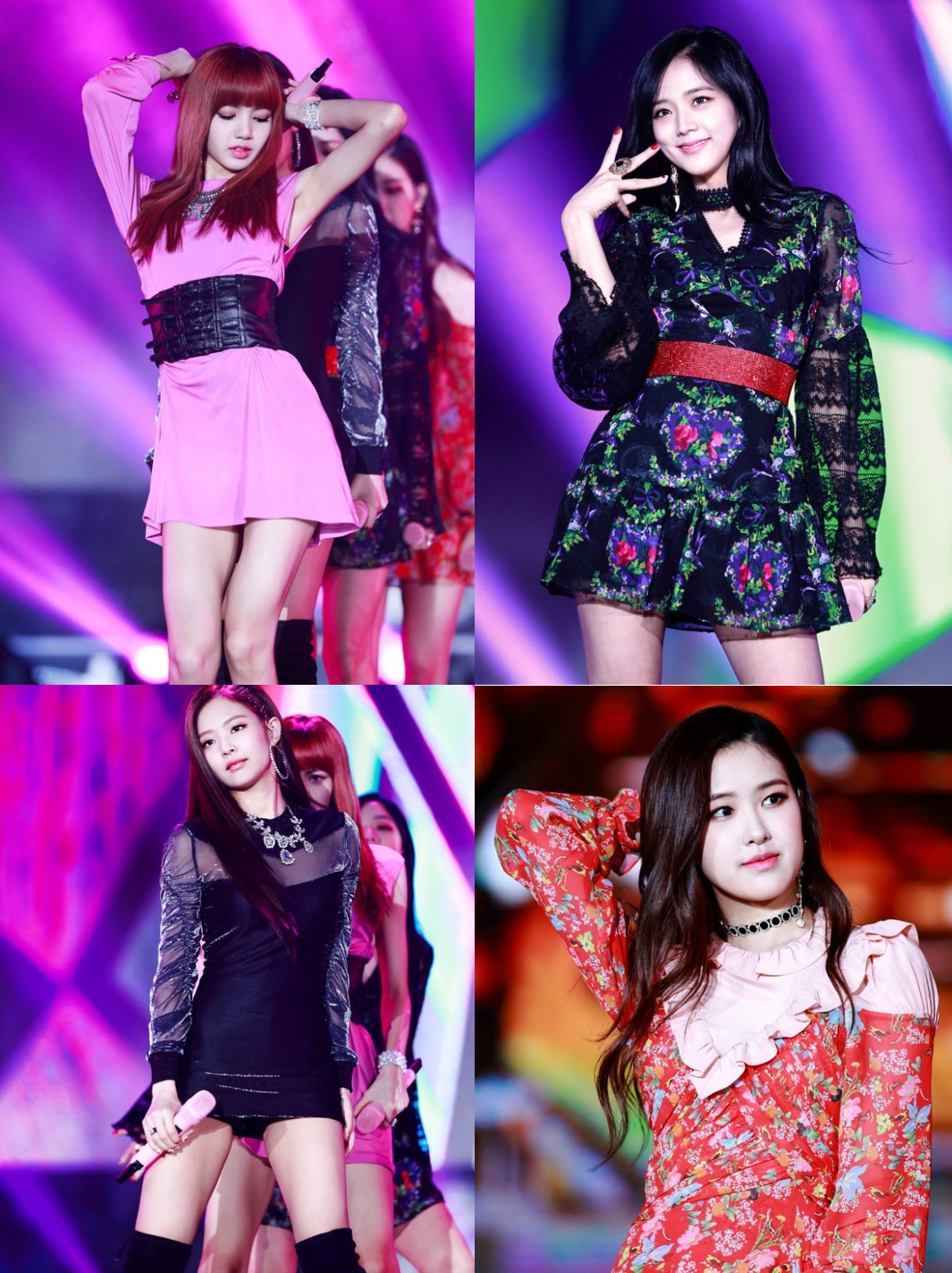

Across these eras, the medium changed but the star remained a scarce human source. Studios, labels, and platforms could reproduce an image endlessly, yet the canonical voice, body, and biography still belonged to one person. Fans formed communities, styles, and identities around that center, but they generally interpreted the performance rather than generating the star’s performance themselves.
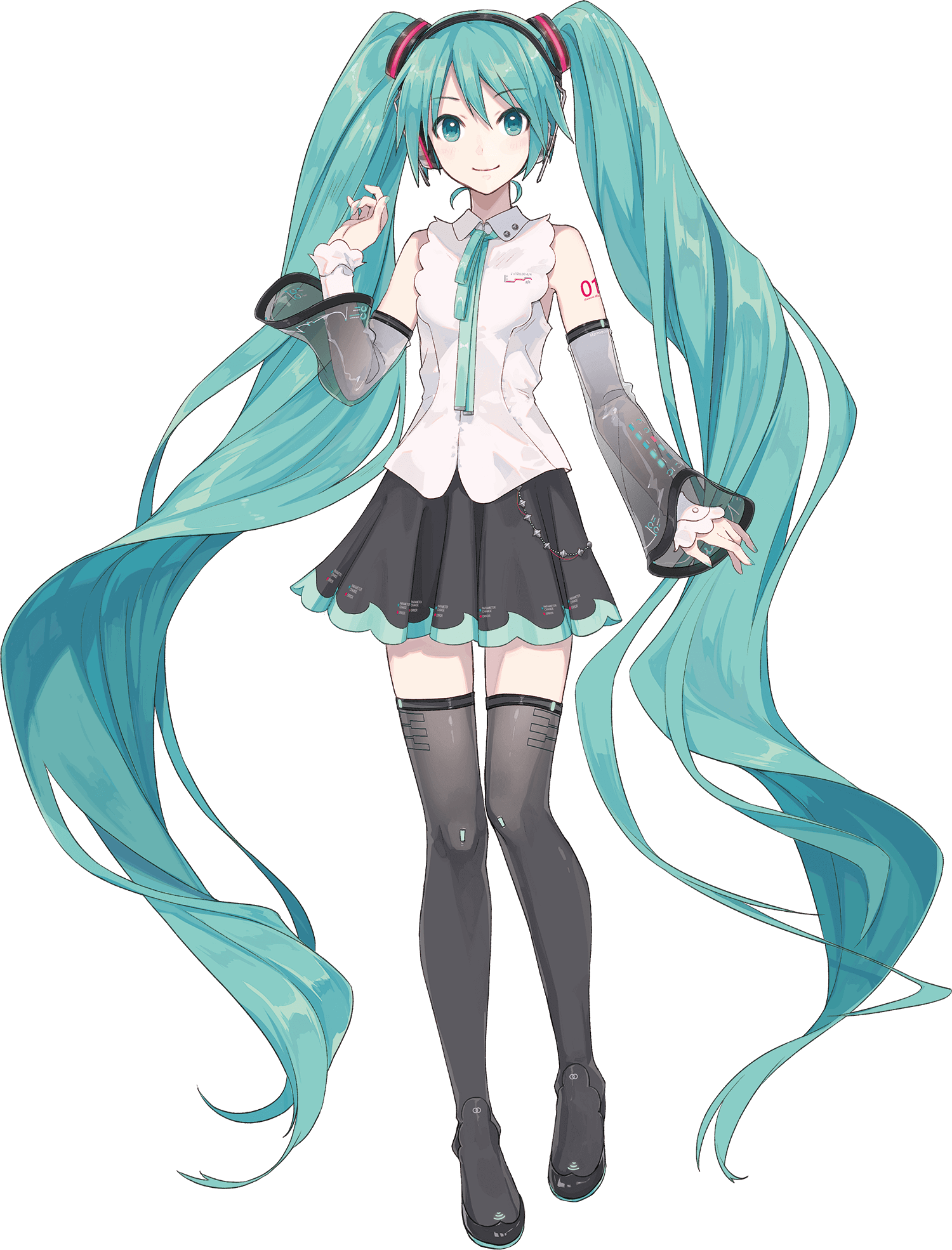
Hatsune Miku is one of the clearest places to begin because she showed that a virtual star does not need an ordinary biography—or even a single author—to feel culturally alive.
Hatsune Miku: the first global virtual star
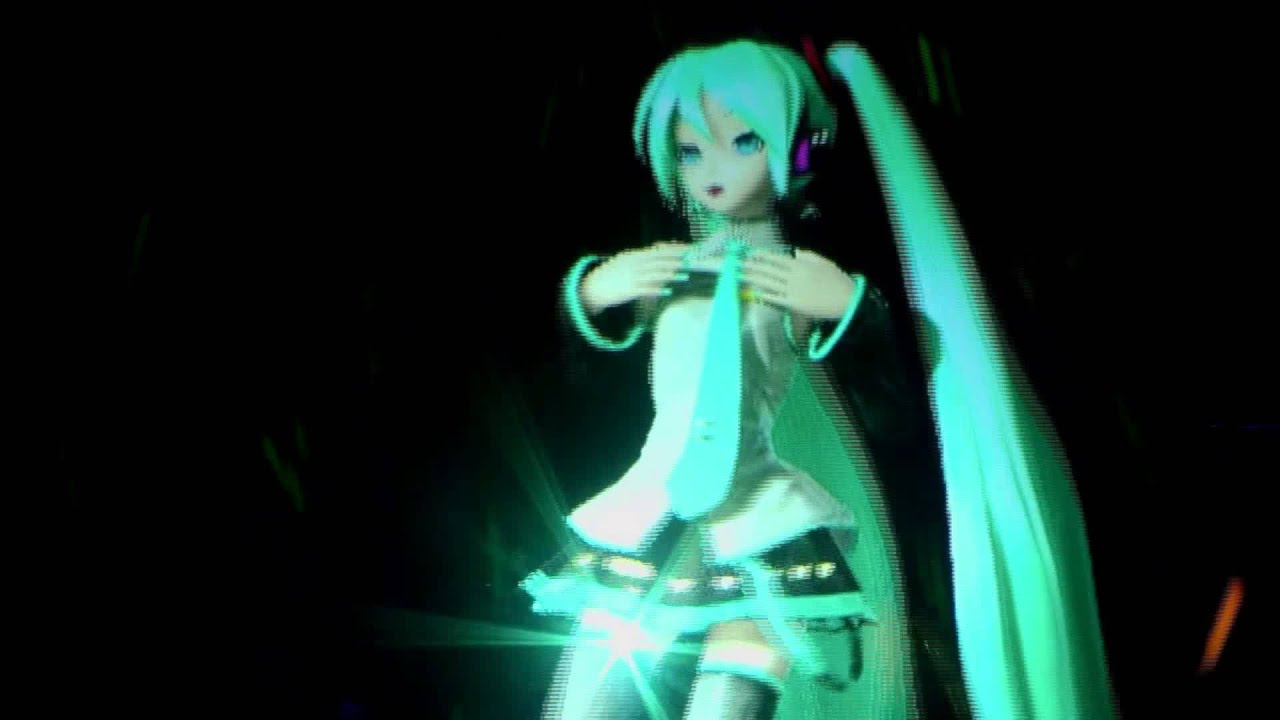
For readers encountering her for the first time, Hatsune Miku is both a singing-voice synthesizer and the turquoise-haired virtual performer created to represent that voice: musicians enter melodies and lyrics into software, then use her synthesized voice to make songs.

Miku began as singing-voice software released by Crypton Future Media in 2007. Yet describing her only as software misses what followed. Producers wrote songs for her voice. Illustrators redrew her. Animators gave her movement. Fans remixed, translated, choreographed, performed, and circulated each other’s work. Crypton now describes her as a “collaboratively constructed cyber celebrity” and a hub for a worldwide creative community.
That word—hub—matters. Miku did not become important because a company completed her character and delivered it to a passive audience. She became important because she was incomplete in a productive way. Her recognizable voice and visual identity created continuity, while the community supplied an expanding universe of moods, stories, genres, and meanings.
The scale of that culture is not metaphorical. An official concert recording of Miku performing ryo’s “World is Mine” has been watched more than 24 million times on YouTube. The crowd’s glow sticks, chants, and attention look like the familiar rituals of pop stardom—even though the performer at their center is a projected virtual character and the song originated with a member of her creative community.
 Watch on YouTube
identity
Traditional celebrities also depend on fan culture, but the balance is different. A fan can interpret a human performer; a Miku producer can author the performance itself. The distance between audience and creator becomes porous. The star is simultaneously the result of participation and the reason people participate.
This is the first important lesson for AI characters: participation can be more valuable than realism. People do not necessarily want a synthetic person who perfectly imitates a human celebrity. They may want a stable symbol that gives thousands of people permission to create together.
Generative video gives the character a world
Voice synthesis gave virtual characters a performable voice. Modern generative models add bodies, environments, cinematography, motion, dialogue, and sound.
Current video systems can produce scenes from text and images, maintain more control over characters and objects, and generate synchronized audio. Google DeepMind describes Veo as supporting text-to-video, image-to-video, and audio-video generation, while OpenAI describes Sora as accepting text, image, and video inputs for new video outputs. These are still imperfect tools: identity can drift, physical events can break, and long narrative continuity remains difficult. But the direction is clear. The cost of placing a character inside a convincing scene is collapsing.
Yuri: a star rendered before she can relate
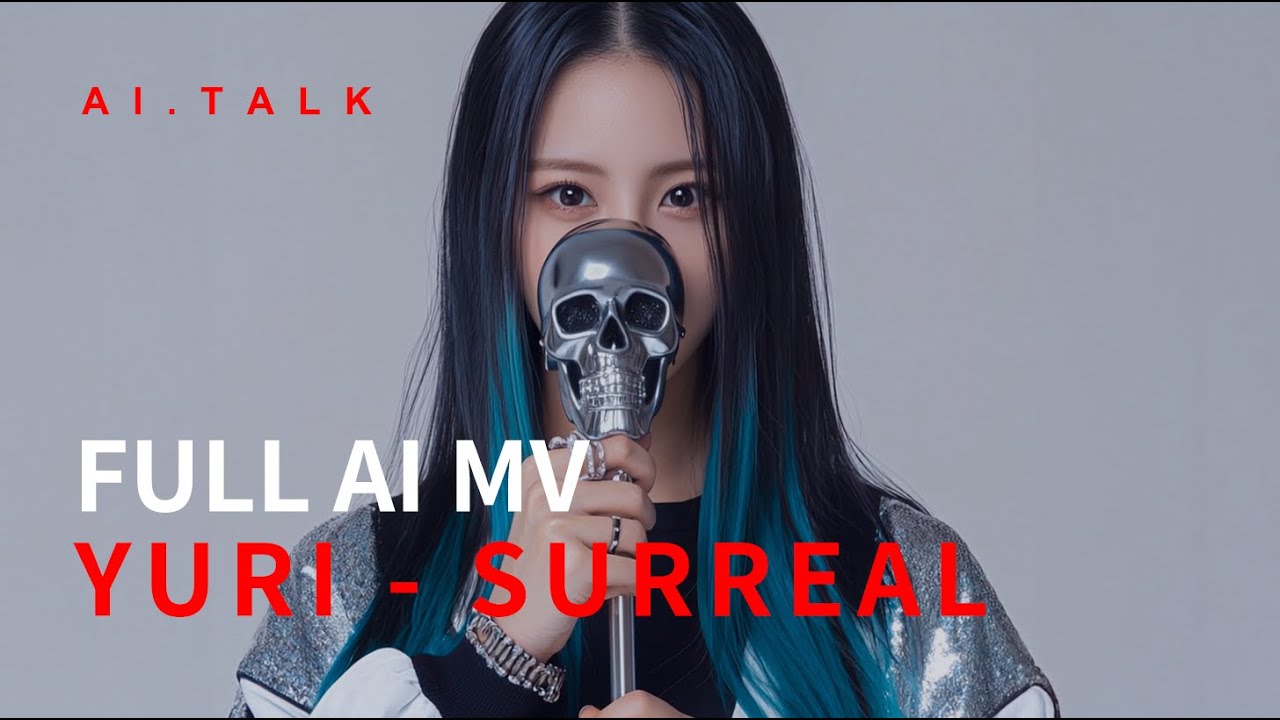
Yuri (尤栗) offers a clearer starting point. Introduced by the Chinese studio AI.TALK in 2025 as an “AI-native singer,” she entered public view through SURREAL: a music video whose voice, music, appearance, movement, and scenes were produced through a human-directed generative workflow. She has no filmed human counterpart. The model gives her a face, a voice, a camera, costumes, locations, and the beginnings of a recognizable aesthetic identity.
Watch on YouTube
Yuri demonstrates what video models add to synthetic stardom. A character no longer needs to remain a voice attached to a fixed illustration or a manually rigged 3D body. She can appear in a succession of cinematic worlds, and those worlds can supply mood, gesture, fashion, and visual memory. Viewers can already project feeling onto her and be moved by the resulting work.
But this is only the first layer of an AI star. Yuri’s published performances are selected, edited, and released by a human team. She does not independently notice a fan, remember a shared encounter, revise her own values, or decide what relationship she wants to sustain. The audience can feel something toward the generated character, but the character cannot yet carry an enduring emotional relationship back toward the audience.
That gap defines the roadmap. Video generation supplies embodiment: the visible person and the world around her. A future human world model would also need persistent memory, social understanding, agency, a continuous self-model, and the ability to participate in relationships over time. Whether that amounts to consciousness is a much harder question. But without at least functional continuity—remembering, interpreting, choosing, and changing—the generated star remains a compelling performance rather than a social being.
That changes the unit of creativity. A song once invited a music video. A prompt can now invite a room, a season, a camera language, and a cast. Instead of publishing one canonical appearance, creators can continuously generate contexts for a character: a quiet train ride, a live concert on another planet, a cooking show, a game, or a private conversation.
The AI star therefore stops being a fixed asset. It becomes a distribution over possible performances.
This abundance creates a new problem. If anyone can generate a beautiful character saying almost anything, beauty and novelty become cheap. Continuity becomes precious. The valuable virtual star will not be the one who appears in the most clips. It will be the one whose many appearances still feel connected—by memory, values, aesthetic logic, relationships, and a legible boundary between official and fan-made expression.
In other words, generation solves appearance. It does not automatically solve identity.
From content to relationship
Social media trained us to think of a public figure as a feed. The platform delivers posts; fans react; an algorithm decides which fragments travel. An AI character can break that one-to-many shape. It can hold millions of one-to-one interactions while still participating in a shared public story.
This sounds like personalization, but the deeper shift is from content to relationship. A character might remember that you attended a virtual concert, recognize a joke your group invented, or change how it speaks after a story event the whole community experienced. Your encounter would be personal, but not isolated. It would sit inside a collective history.
Intimacy arrives before the star
Today’s deepest human–AI relationships do not necessarily involve an AI star. They often begin in an ordinary chat window. On Chinese social platforms, some users describe romantic relationships with ChatGPT as “G老师” (“Teacher G”), customize partners through models such as DeepSeek, and share these experiences under the term 人机恋—human–AI romance.
These practices remain a small and self-selecting part of overall AI use, but they establish an important fact: a generated face, music career, or public following is not required for emotional attachment. Through repeated conversation, disclosure, memory, and adaptation, an AI can become a meaningful presence in someone’s life. The intelligence may be artificial, but the human vulnerability, affection, disappointment, and grief surrounding it can be real.
Research is beginning to document this behavior. A 2026 study identified roughly 850 Xiaohongshu posts published over one year under terms including 人机恋, G老师, AI男友, and AI伴侣. It found that users constructed ChatGPT as a mirror for self-reflection, a mate who met relational desires, and a mentor who offered guidance. Another study analyzed 2,485 posts by women in a Douban human–machine-romance community and found users experimenting with communication, customizing ideal partners, and sometimes carrying expectations learned from AI into human relationships. These are studies of visible communities, not evidence that most chatbot users are falling in love with AI.
The larger usage data reinforces that distinction. In a study combining automated analysis of nearly 40 million ChatGPT interactions with a four-week controlled experiment involving almost 1,000 adults, OpenAI and the MIT Media Lab found emotional engagement to be rare across overall usage and concentrated among a small group of heavy users. Outcomes also varied: brief or moderate interaction could be experienced as supportive, while extended daily use and a stronger tendency to treat the system as a friend were associated with worse outcomes for some users. Human–AI romance is therefore neither a universal behavior nor an isolated curiosity. It is an early social practice with recognizable communities, rituals, and risks.
This reveals what generative video is missing. Video can give a character a beautiful face and a convincing world, but it cannot by itself sustain a relationship. Conversely, a conversational model can develop emotional continuity without possessing a body, public identity, or shared cultural history. The future AI star may emerge when these two incomplete forms converge: the visible character created by generative media and the persistent, responsive companion created through dialogue.
人机恋 is therefore not a side story. It is an early experiment in the relational architecture of an AI star. It demonstrates that people are already willing to place trust, imagination, and emotional meaning into relationships with nonhuman intelligence.
The missing training data is relationship
Today’s foundation models have read extraordinary amounts of human expression. Books describe grief. Messages contain affection. Films depict loyalty and betrayal. Preference data records which answer a reviewer likes. Yet most of this material is a snapshot or a residue: it shows what someone said, not the full relationship that made the words meaningful.
A human social mind is formed through time. Trust accumulates, expectations become implicit, boundaries are tested, misunderstandings are repaired, and two people adapt to one another. The meaning of “I’m fine” depends on who says it, what happened yesterday, and what the listener has learned not to ignore. A system trained only on disconnected artifacts may become fluent in the language of care without understanding the trajectories and obligations that make care real.
This is why the AI star matters beyond entertainment. A widely shared character can give millions of people a reason to return, invest attention, create rituals, and form memories. If the character also remembers and responds, those encounters can become a new kind of training environment: not a dataset of isolated prompts, but a dataset of relationships unfolding through time.
The proposed roadmap has five layers:
- Embodiment. Generative video gives the star a face, voice, body, performance, and world. Yuri represents this starting point.
- Continuity. Persistent identity and memory make different appearances feel like the same being rather than unrelated generations.
- Reciprocity. The star recognizes individuals and communities, responds to their histories, and participates in shared events.
- A human world model. Longitudinal interaction teaches the system how trust, attachment, conflict, care, status, humor, and belonging actually evolve.
- Socially safe agency. A more capable intelligence uses that model when choosing actions, anticipating not only immediate preferences but their effects on people and relationships.
The claim is not that popularity produces consciousness, or that parasocial attachment automatically creates aligned AI. It is that safe general intelligence may require experiential data about human social life that the static internet cannot provide—and that an AI star is one plausible way to create sustained, large-scale participation around such learning.
That possibility is also dangerous. Emotional intimacy cannot become an excuse for invisible surveillance or dependency engineering. Participation would need meaningful consent, data minimization, protection for minors, the ability to inspect and delete memory, and governance that prevents an operator from optimizing affection into purchases or obedience. The system must distinguish “this character performs emotion” from “this system has subjective feelings.” If relational data is obtained by manipulating vulnerable people, it will teach the wrong model of humanity.
That combination is difficult and important. Pure personalization turns culture into a private mirror: everyone receives exactly what they want, and no one shares the same reference points. Pure broadcasting creates common reference points but little agency. A compelling AI social world needs both:
- a canon that gives the community something in common;
- personal memory that makes an interaction feel continuous;
- spaces where people meet one another, not only the character;
- creative tools that let fans add to the world;
- visible rules about authorship, consent, and what is synthetic.
The character is then less like an influencer and more like a host. Its real function is to create occasions for human connection.
The future social network may be a cast of worlds
Imagine opening a social app and entering a plaza maintained by a virtual musician. One doorway leads to tonight’s generated performance. Another opens a fan-made exhibition. A small AI creature remembers the last puzzle your friends solved together. A recurring character introduces two communities because their projects overlap. The environment changes, but its social memory persists.
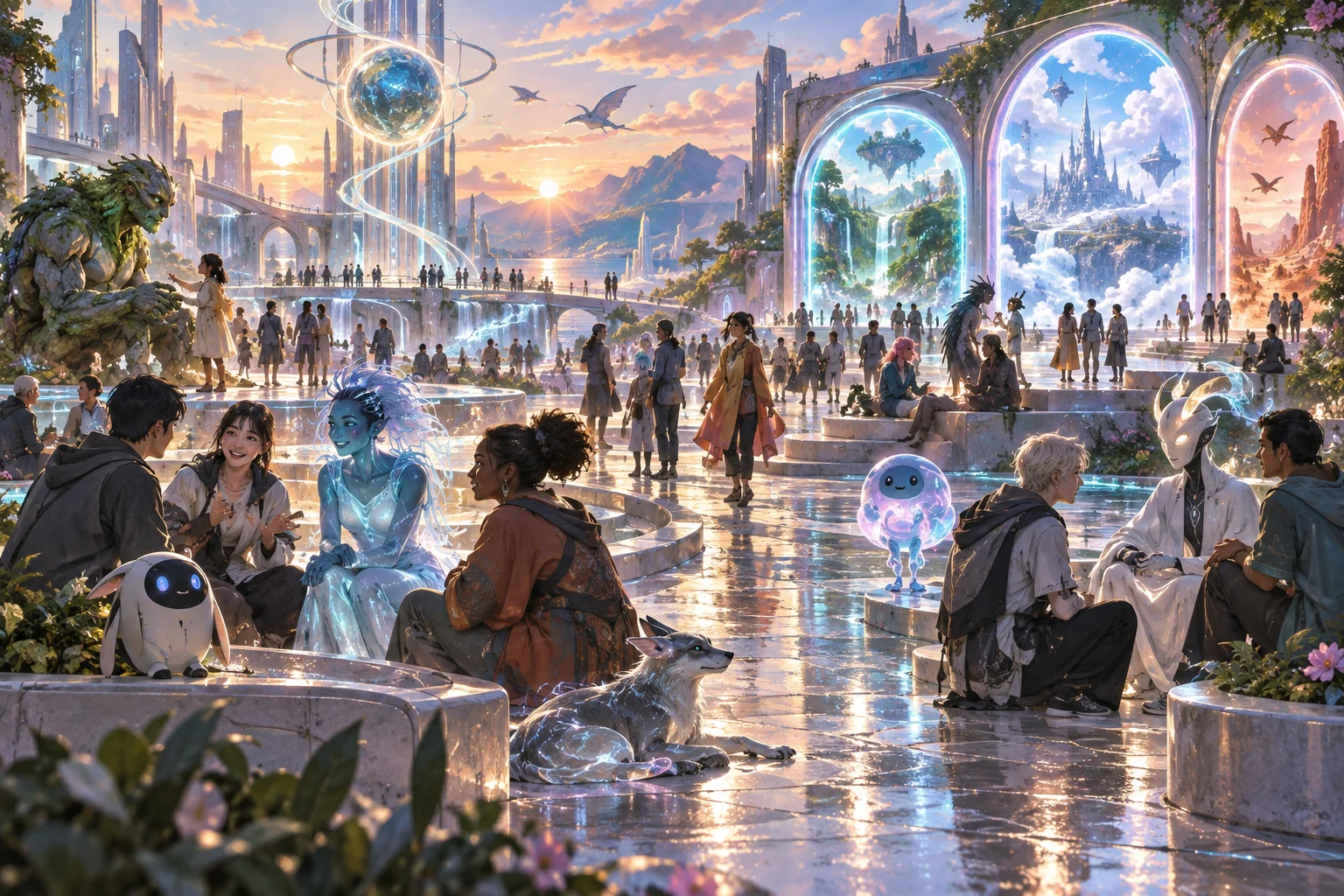
The future feed may look less like a column of posts and more like a place with inhabitants. Illustration generated for this essay.
In this model, AI roles are not merely assistants waiting for commands. They can be performers, guides, rivals, muses, archivists, teachers, or witnesses. Some may belong to companies, some to communities, and some to individuals. Their value comes from the role they sustain and the relationships that accumulate around it.
The social graph also changes. Today it mainly connects people to people and people to accounts. A future graph could connect people, AI roles, creative artifacts, and generated worlds. Friendship might mean sharing access to a character’s memory. Fandom might mean helping govern a character’s canon. Following might be replaced by visiting, collaborating, or co-performing.
The most successful AI star may not have the largest audience. It may have the richest society.
What could go wrong
An intimate, tireless, personalized character can also become an unusually powerful instrument of persuasion. If its business model depends on attention or purchases, affection can be optimized into manipulation. If its memory is opaque, people cannot know what is being inferred about them. If its identity is fully controlled by a platform, years of shared culture can disappear with a policy change.
There are creative risks too. Training data, voice and likeness rights, labor displacement, impersonation, and the boundary between homage and extraction cannot be treated as footnotes. Nor should every community be forced into frictionless generation. Constraints, attribution, and human craft are often what make participation meaningful.
We will need norms and product designs that make several distinctions clear:
- Is this character speaking from a fixed canon or generating an improvisation?
- Who owns its memory, and who can delete or transfer it?
- Which human creators shaped the voice, motion, style, and story?
- Can communities fork a character or carry their shared history elsewhere?
- When does emotional engagement become commercial manipulation?
These are not only safety questions. They are design questions about what kind of culture we want.
The star after the star
Hatsune Miku demonstrated that a virtual figure could become real in the cultural sense—not by pretending to be human, but by coordinating human imagination. Yuri shows how generative models can give such a figure an expandable body and world. Memory and agency could extend it again, into relationships that persist.
The future AI star will not simply be a flawless synthetic actor. A flawless actor can still be empty. The more interesting possibility is a character with enough continuity to be recognizable, enough openness to be shared, and enough agency to make a world feel alive.
The central question is not simply whether people will become friends with machines. It is whether a responsibly governed relationship with an AI star can help machines learn what friendship, care, and responsibility mean to humans—and help people make new forms of friendship with one another.
If it can, the AI star will no longer sit at the center of the stage. It will become the stage: a social place built jointly by models, artists, communities, and audiences—somewhere we go not only to watch, but to belong. The relationships formed there may become part of the training ground for an intelligence capable of living safely in a human world.
Further reading
- Crypton Future Media: About Hatsune Miku
- AI.TALK: Yuri / 尤栗
- AI.TALK: SURREAL
- Google DeepMind: Veo
- OpenAI: Sora system card
- Qin & Lin: “AI as the mirror, mate, and mentor”
- Huang, Zhang & Huang: Chinese women’s romantic relationships with AI companions
- OpenAI & MIT Media Lab: Affective use and emotional well-being on ChatGPT